
Support the oil during the frying process
Industrial frying places continuous stress on cooking oil. High temperatures and repeated frying can accelerate oxidation and reduce the oil’s natural antioxidant protection.
FryLiquid® is designed to support frying oil during production by replenishing food-derived antioxidant support lost during heat and cooking.
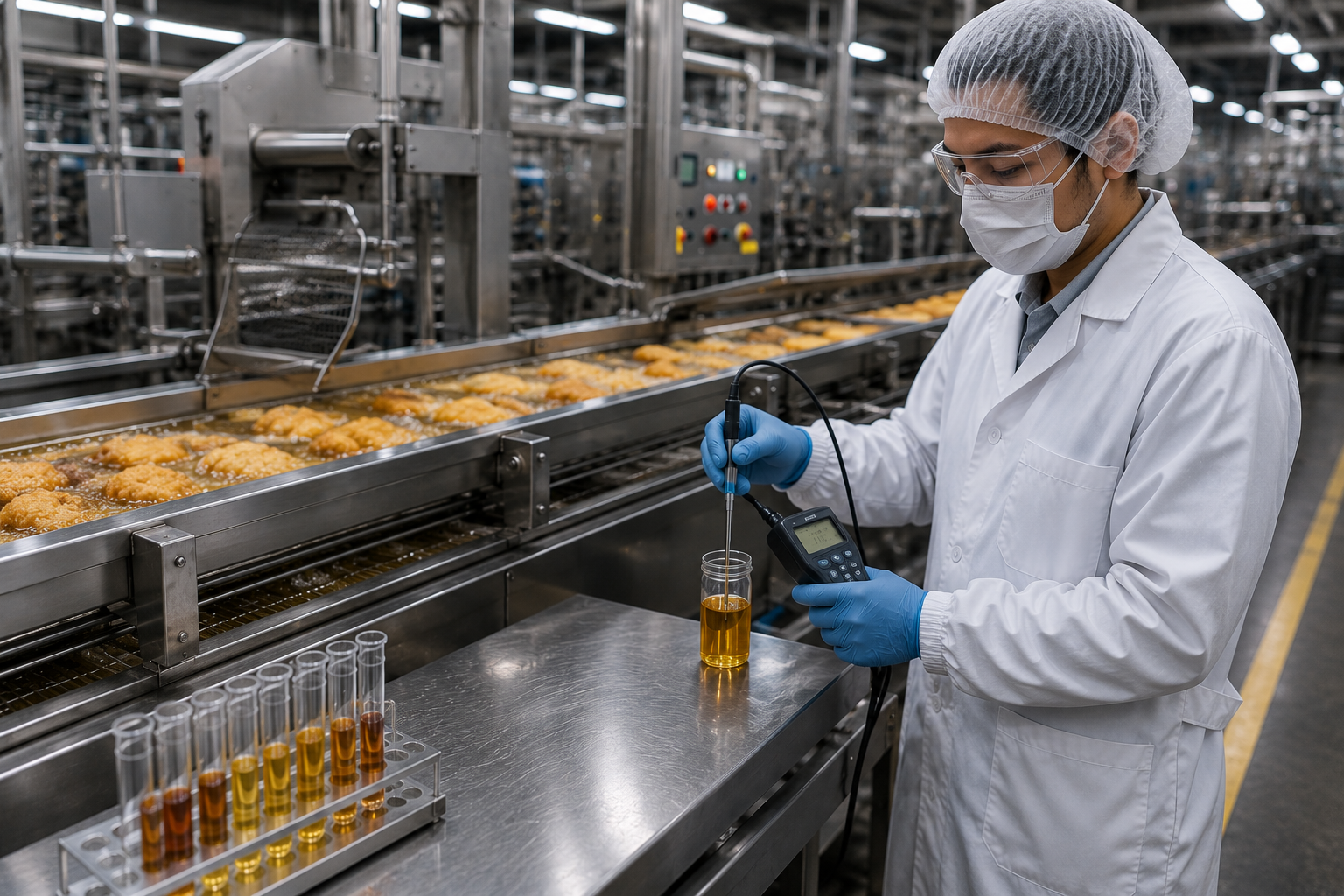
Frying consumes antioxidants
High temperatures and production
conditions place the oil under
constant stress.
FryLiquid adds antioxidant support
Food-derived antioxidants are
replenished during production.
Oil performance is supported
Support better consistency, control,
and oil-management decisions.
Filtration vs FryLiquid®
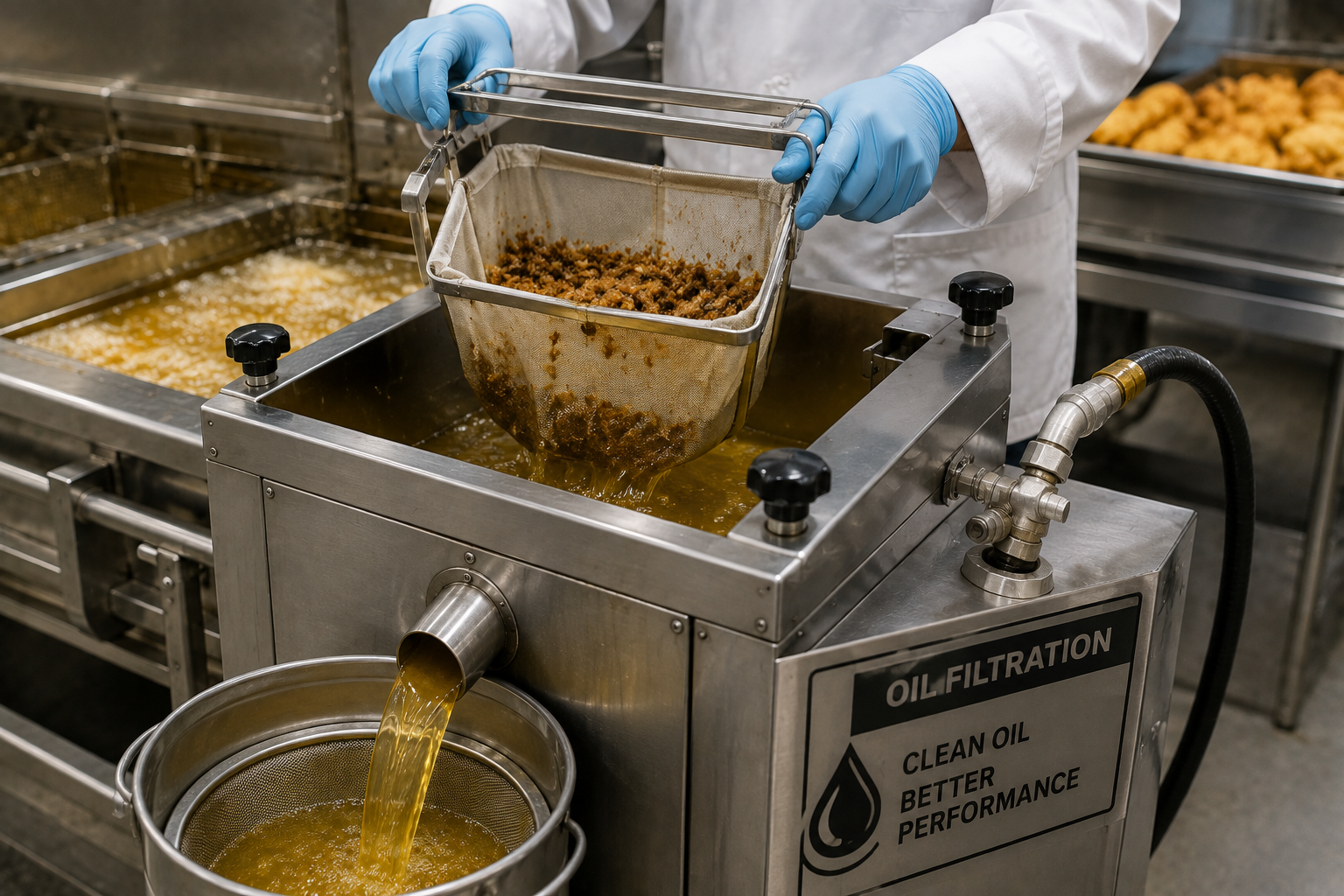
Filtration removes physical debris.
Oil filtration removes crumbs, food particles, and other suspended debris from frying oil.

FryLiquid® supports the oil itself.
FryLiquid® is designed to provide antioxidant support during frying, helping address a part of oil management that mechanical filtration does not address.
The two processes work together, not as replacements for one another.
Filtration is essential for removing physical contaminants from frying oil, but it does not address everything happening at the molecular level.
Crumbs and suspended particles can be captured through filtration. Oxidation, however, is a chemical process that occurs within the oil during heating.
That is why filtration and antioxidant support serve complementary roles in a complete oil-management program.
Why Antioxidants Matter
Frying oil is exposed to high temperatures throughout industrial production. This can accelerate oxidation and consume the oil’s naturally occurring antioxidant protection.
Maintaining antioxidant support can be an important part of managing oil throughout a production run, particularly in operations where oil is exposed to continuous or repeated frying.
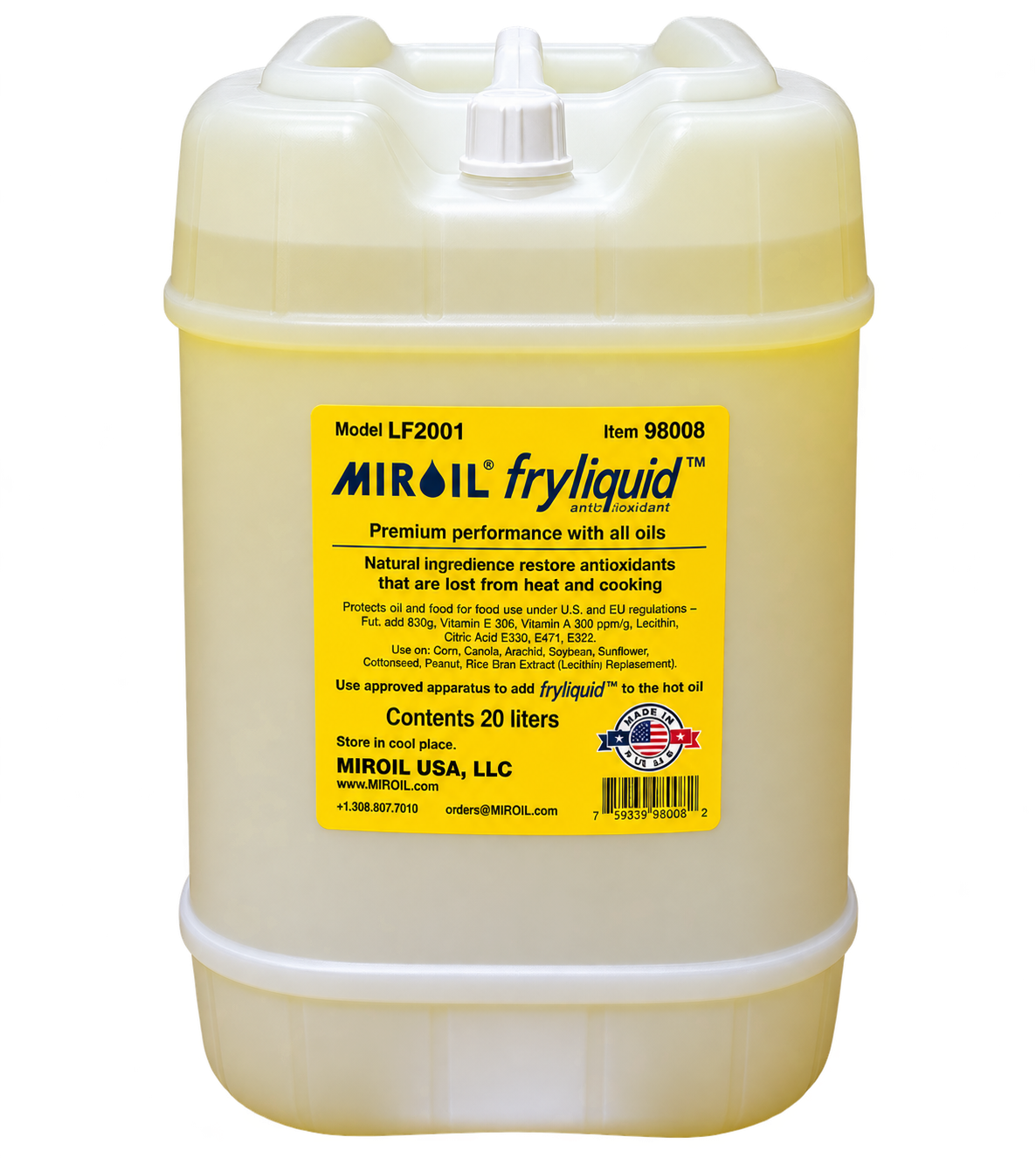
Use FryLiquid® With Filtration and Oil Testing
For industrial food manufacturers, effective oil management involves more than one process.
FryLiquid® can be incorporated alongside:
– Mechanical oil filtration
– Routine oil testing
– Production monitoring
– Frying temperature control
– Scheduled oil-management procedures
Together, these practices help production teams make more informed decisions about oil condition and performance.
 Fryliquid by MirOil